Author: dastakhov

  • Vocabulary

    Vocabulary

    Design: A planned arrangement of visual elements to construct an organized visual pattern.

    Line: a mark left by a dot or point moving over a surface. It is often an outline or contour, showing the edge of an object, or figure. They can be horizontal, vertical, diagonal, long, short, straight, curved, thick, thin, solid, dashed, blurred, uneven, sharp-edged and can create patterns.

    Contour: A line used to follow the edges of forms and thus describe their outlines.

    Shape: An enclosed space defined by line, color, value, or texture. Circles, squares, and triangles are three basic shapes.

    Form: When referring to objects, it is the shape and structure of that object. When referring to two-dimensional artworks, it is the visual aspect of composition, structure, and the work as a whole.

    Horizon line: The farthest point we can see where the delineation between the sky and ground becomes distinct. The line on the picture plane that indicates the extent of illusionistic space and on which are located the vanishing points. 

    Plane: A plane in art and design refers to a flat, two-dimensional surface area within a composition. In three-dimensional forms, such as in sculpture or 3D modeling, a plane is one of the various flat surfaces that define the shape and volume of the object. Planes are essential for depicting the way light and shadow interact with a form, thereby contributing to the perception of depth, perspective, and three-dimensionality in both two-dimensional and three-dimensional works.

    Focal point: A compositional device emphasizing a certain area or object to draw attention to the piece and to encourage closer scrutiny of the work. 

    Value: refers to the degrees of light to dark white being the lightest value and black the darkest. The term, lighting refers to the degrees of value being created by one or more particular light source such as the sun or a lamp.

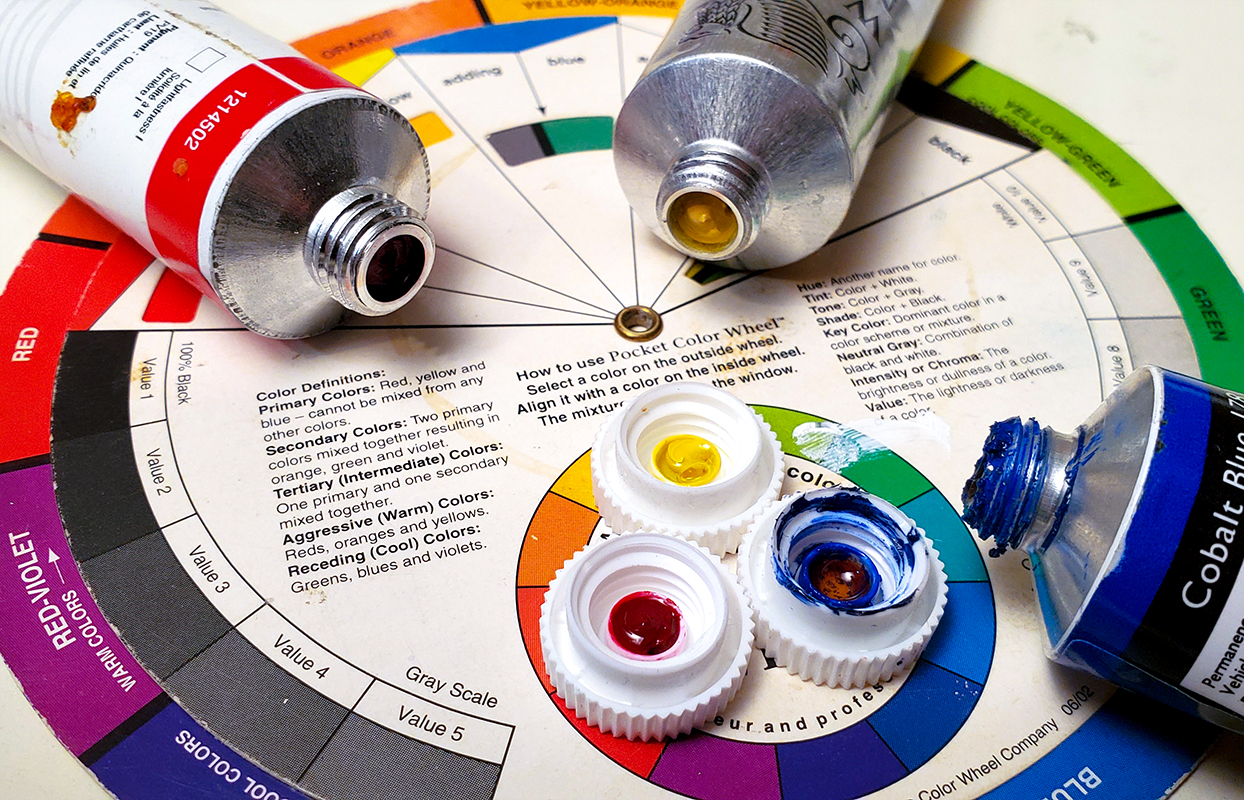
    Color: the phenomenon of light which creates the visible spectrum helping us to distinguish one form from another. Color has hue, value, saturation (intensity).

    Hue: the characteristic quality of a color that separates it from others, i.e. red, blue, etc.

    Saturation: the quality or degree of the color content or chroma from low intensity (neutral) to high intensity.

    Primary colors: these 3 colors are the base colors for every other color on the color wheel. Cannot mix any other colors to achieve these colors. (blue, red and yellow).

    Contrast: Refers to the differences in values, colors, textures, shapes and other elements. Contrast can add interest to the work. Black and white creates the highest value of contrast. is the use of several elements of design to hold the viewer’s attention and to guide the viewer’s eye through the artwork.

    Space: In two-dimensional art, space refers to the illusion of depth or three-dimensionality on a flat surface. This concept is achieved through the use of various techniques such as perspective, shading, and the placement of objects within the composition to suggest depth and distance.

    In three-dimensional art, space involves the actual area that the art occupies. For instance, in sculpture or installation art, space becomes an integral part of the artwork, with the viewer’s interaction with the space around the piece contributing to the overall experience and interpretation of the work. In performance art, space is not just the physical location, but also the conceptual and emotional environment created by the performance.

    Negative Space: Negative space refers to the area that surrounds and defines the positive shape or form in an artwork. It is often described as the background or the empty space, but it plays a crucial role in balancing and emphasizing the main subjects. Negative space can be thought of as the ‘ground’ or ‘void’ that contrasts with the ‘figure’ or positive elements. In effective compositions, negative space is not merely an absence, but an active component that contributes to the overall visual balance, creating a sense of harmony, context, and sometimes, a thematic or symbolic meaning. This concept is fundamental in all forms of visual art, from painting and drawing to graphic design and photography, where the interplay between positive and negative spaces can dramatically impact the artwork’s aesthetic and narrative qualities.

    Positive Space: In art, positive space refers to the areas occupied by the main subjects or forms in a composition. These are the focal elements that initially attract the viewer’s attention. The concept emphasizes the subject’s visual importance and presence within the artwork. Positive space is often contrasted with negative space, which surrounds and defines it, in terms like figure/ground or foreground/background. This interplay is crucial for creating balance and conveying the artwork’s narrative and emotional impact.

    Ambiguous Space: In art, ambiguous space refers to an area in a composition that defies clear categorization as either positive or negative space. This type of space blurs the conventional boundaries, embodying characteristics of both, and often changes in perception depending on the viewer’s perspective. Ambiguous space challenges the viewer’s visual interpretation, creating a dynamic and often intriguing experience. It encourages a deeper engagement with the artwork, as the interpretation of space and form can shift, offering multiple readings or meanings. This concept is frequently used to add depth, complexity, and a sense of mystery to a composition, playing with the viewer’s perception and understanding of space within the artwork.

    Linear Perspective: Linear perspective is an artistic technique used to create the illusion of depth and three-dimensionality on a flat surface. It involves drawing objects in such a way that they appear to recede in space and converge at a single point, known as the vanishing point, on the viewer’s horizon line. This technique relies on the use of straight lines and geometric rules to depict the relative size, shape, and position of objects, making them appear smaller as they get further away, thus mimicking the way the human eye perceives distance. Linear perspective, first developed during the Renaissance, is fundamental in creating realistic scenes and landscapes in two-dimensional art, allowing artists to accurately represent spatial relationships in their work.

    • One-point perspective A system of spatial illusion in two dimensional surface based on the convergence of parallel lines to a common vanishing point usually on the horizon.
    • Two-point perspective A scene that is viewed through an angle, with no objects parallel to the picture plane and with edges receding on two vanishing points on the horizon line.
    • Three-point perspective A scene that is viewed through an angle, with no objects parallel to the picture plane and with edges receding on three vanishing points, two on the horizon line and one above or below the horizon.
    • Vanishing point In linear perspective, the point at which parallel lines appear to converge on the horizon line. Depending on the view there may be more than one vanishing point.

    Aerial perspective The perception of less distinct contours and value contrasts as forms recede into the background. Colors appear to be washed out in the distance or take on the color of the atmosphere. Also called atmospheric perspective.

    Texture: The surface quality of objects that appeals to the tactile (physical) sense. 

    Pattern: In art and design, a pattern refers to the repeated arrangement of a visual element or motif in a consistent, predictable sequence. This repetition can occur in various forms, such as shapes, lines, colors, or textures, and is often used to create visual interest, rhythm, and harmony within a composition. Patterns can be simple or complex, and they can convey a sense of order and structure, or, when varied slightly, can introduce dynamism and movement. Patterns are not limited to surface decoration; they can also imply underlying structural principles in both natural and man-made forms, playing a significant role in the perception and interpretation of art and design.

    Format: In the context of art and design, ‘format’ refers to the specific shape and size of the outer boundaries of a composition. It encompasses the physical dimensions and the aspect ratio (the relationship between width and height) of the artwork. The choice of format is a crucial initial decision for an artist or designer, as it can significantly influence the arrangement and impact of the visual elements within the work. Different formats, such as portrait, landscape, square, or panoramic, can affect the viewer’s perception and interaction with the artwork, guiding the narrative flow and framing the subject matter in unique ways. The format sets the stage for the artwork’s spatial dynamics and overall aesthetic.

    Unity:

    In art and design, unity is a fundamental principle that refers to the cohesive quality of an artwork, where all its components – including elements like line, shape, color, and texture, as well as design principles like balance, contrast, and rhythm – are harmoniously combined to create a coherent, integrated whole. A work achieves unity when its diverse parts are skillfully balanced and organized, ensuring that no single element overpowers others, but rather, they all contribute to the overall aesthetic and thematic goals of the piece. Unity often evokes a sense of completeness and wholeness in the viewer, and while closely related to harmony, it also encompasses the effective integration of variety and contrast within the composition, enhancing the artwork’s visual and emotional appeal.

    Balance: refers to the visual ‘weight’ of a composition that is the result of either a symmetrical, asymmetrical, or radial arrangement of the visual elements. 

    Rhythm: refers to the relative repetition and/or variation of visual elements that often leads to rhythm, visual interest, and control of the viewers eye direction throughout a composition.

    Proportion: refers to the relative scale of one form in relationship to another form.

    Composition: The overall arrangement and organization of visual elements on the two-dimensional surface.

    Picture Plane: the surface of a drawing or painting.
  • Art Classes

    Art Classes

    2-D Design

    This course will focus on the basics of design utilizing the principles and practices involved in the production of art forms.

    Beginning Drawing

    This course is an introduction to principles and techniques in drawing. Students will gain a working knowledge of line, shape, perspective, proportion, volume, and composition. Students will learn how to look at, evaluate and present art…

    Beginning Life Drawing

    A beginning life drawing course emphasizing the study and analysis of the human form using basic art materials and fundamental drawing concepts.

    Acrylic Painting

    This is an intermediate course in acrylic painting with continuing study of the theory and practice of painting.

  • Museums Annual Free-For-All Day

    Museums Annual Free-For-All Day

    Saturday, January 25, 2020

    Over 40 museums—presenting art, cultural heritage, natural history, and science—will open their doors and invite visitors to attend free of charge.

    This offer is for general museum admission only and does not apply to specially ticketed exhibitions. Regular parking fees apply at each museum. Consult individual museum websites for hours, directions, and other visitor information.

    Download Press Release

    Participating Museums 

    Academy Museum of Motion Pictures
    (Museum opening in 2020. See activity details.)

    American Museum of Ceramic Art

    Automobile Driving Museum

    Autry Museum of the American West

    Bowers Museum

    The Broad*

    California African American Museum

    California Science Center

    Cayton Children’s Museum

    Columbia Memorial Space Center

    Craft Contemporary

    Descanso Gardens

    Forest Lawn Museum

    Fowler Museum at UCLA

    Frederick R. Weisman Museum of Art

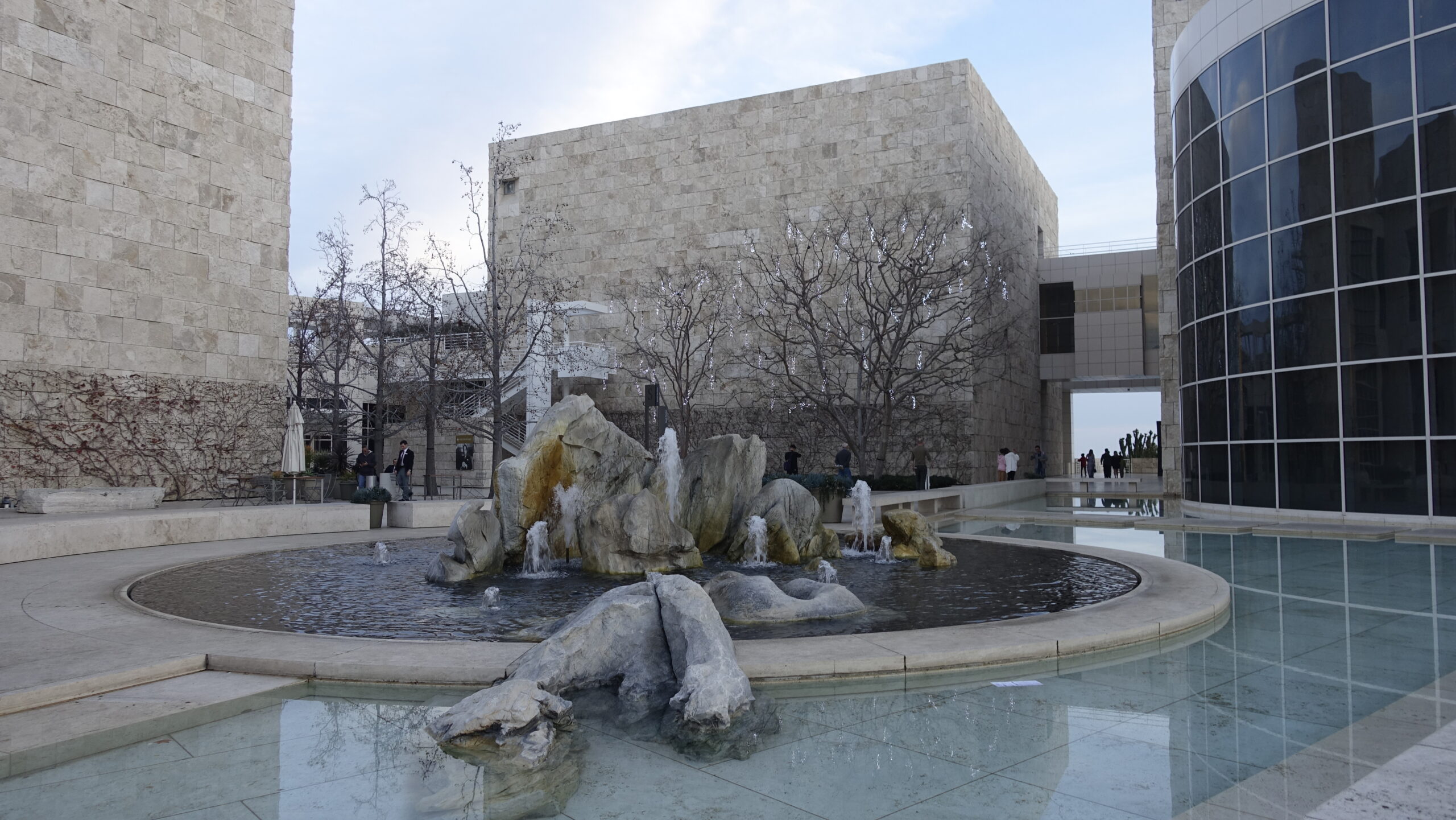
    Getty Center Museum

    Getty Villa Museum

    Glendora Historical Society

    Hammer Museum

    Heroes Hall Veterans Museum

    ICA LA

    Japanese American National Museum

    Kidspace Children’s Museum

    La Brea Tar Pits
    General admission only; free tickets available at tarpits.org/tpfreeforall

    LA Plaza de Cultura y Artes

    LACMA

    Los Angeles County Fire Museum

    Los Angeles Museum of the Holocaust

    MOCA (Museum of Contemporary Art, Los Angeles)

    Muckenthaler Cultural Center

    Museum of Tolerance**

    Natural History Museum of Los Angeles County
    General admission only; free tickets available at nhm.org/freeforall

    OCMA (Orange County Museum of Art)

    Pomona College Museum of Art

    Rancho Santa Ana Botanic Garden

    Santa Barbara Historical Museum

    Santa Barbara Museum of Art

    Santa Barbara Museum of Natural History
    (Please note free admission is for the museum only, not the Sea Center.)

    Skirball Cultural Center
    (Let us know you’re interested in visiting on Free-For-All Day!)

    Sunnylands Center & Gardens

    The International Printing Museum

    The Wende Museum

    Torrance Art Museum

    USC Fisher Museum of Art

    USC Pacific Asia Museum

    Valley Relics Museum

    *At The Broad, special exhibition Shirin Neshat: I Will Greet the Sun Again, will be free along with general admission on Saturday, January 25 only.

    **The Museum of Tolerance will be participating on Sunday, January 26 only.

  • Museums Annual Free-For-All Day

    Museums Annual Free-For-All Day

    Saturday, January 25, 2020

    Over 40 museums—presenting art, cultural heritage, natural history, and science—will open their doors and invite visitors to attend free of charge.

    This offer is for general museum admission only and does not apply to specially ticketed exhibitions. Regular parking fees apply at each museum. Consult individual museum websites for hours, directions, and other visitor information.

    Download Press Release

    Participating Museums 

    Academy Museum of Motion Pictures
    (Museum opening in 2020. See activity details.)

    American Museum of Ceramic Art

    Automobile Driving Museum

    Autry Museum of the American West

    Bowers Museum

    The Broad*

    California African American Museum

    California Science Center

    Cayton Children’s Museum

    Columbia Memorial Space Center

    Craft Contemporary

    Descanso Gardens

    Forest Lawn Museum

    Fowler Museum at UCLA

    Frederick R. Weisman Museum of Art

    Getty Center Museum

    Getty Villa Museum

    Glendora Historical Society

    Hammer Museum

    Heroes Hall Veterans Museum

    ICA LA

    Japanese American National Museum

    Kidspace Children’s Museum

    La Brea Tar Pits
    General admission only; free tickets available at tarpits.org/tpfreeforall

    LA Plaza de Cultura y Artes

    LACMA

    Los Angeles County Fire Museum

    Los Angeles Museum of the Holocaust

    MOCA (Museum of Contemporary Art, Los Angeles)

    Muckenthaler Cultural Center

    Museum of Tolerance**

    Natural History Museum of Los Angeles County
    General admission only; free tickets available at nhm.org/freeforall

    OCMA (Orange County Museum of Art)

    Pomona College Museum of Art

    Rancho Santa Ana Botanic Garden

    Santa Barbara Historical Museum

    Santa Barbara Museum of Art

    Santa Barbara Museum of Natural History
    (Please note free admission is for the museum only, not the Sea Center.)

    Skirball Cultural Center
    (Let us know you’re interested in visiting on Free-For-All Day!)

    Sunnylands Center & Gardens

    The International Printing Museum

    The Wende Museum

    Torrance Art Museum

    USC Fisher Museum of Art

    USC Pacific Asia Museum

    Valley Relics Museum

    *At The Broad, special exhibition Shirin Neshat: I Will Greet the Sun Again, will be free along with general admission on Saturday, January 25 only.

    **The Museum of Tolerance will be participating on Sunday, January 26 only.

  • How to recognize the authors of paintings

    How to recognize the authors of paintings

    How to recognize the authors of paintings

    If the images have a dark background and everyone has tortured expressions on their faces, it’s Titian.

    If everyone in the paintings has enormous asses, then it’s Rubens.

    If all the men look like cow-eyed curly-haired women, it’s Caravaggio.

    If the paintings have tons of little people in them but otherwise seem normal, it’s Bruegel.

    If the paintings have lots of little people in them but also have a ton of crazy bullshit, it’s Bosch.

    If everyone looks like hobos illuminated only by a dim streetlamp, it’s Rembrandt.

    If the painting could easily have a few chubby Cupids or sheep added (or already has them), it’s Boucher.

    If everyone is beautiful, naked, and stacked, it’s Michelangelo.

    If you see a ballerina, it’s Degas.

    If everything is highly-contrasted and sharp, sort of bluish, and everyone has gaunt bearded faces, it’s El Greco.

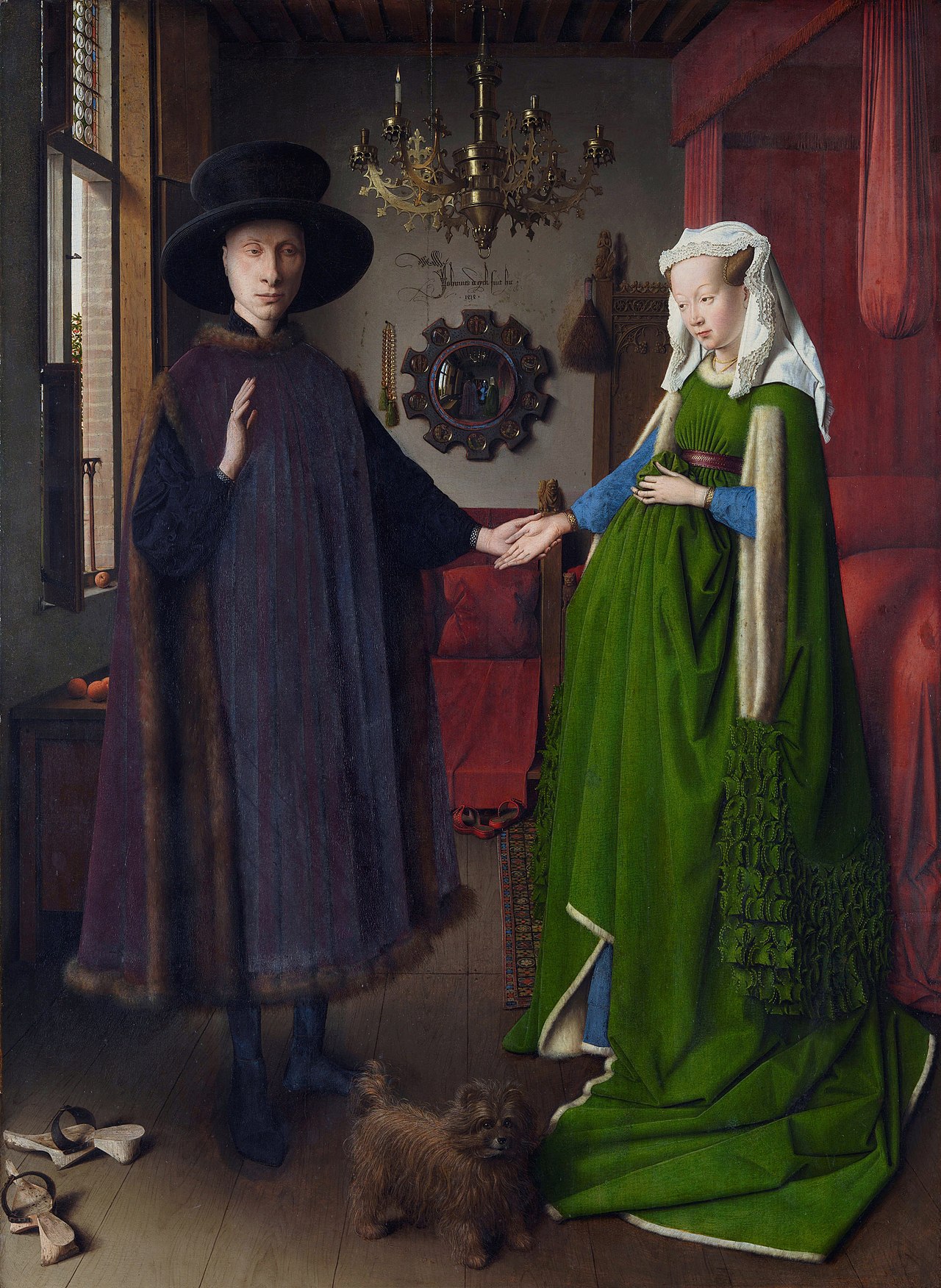
    If everyone – including the women – looks like Putin, then it’s van Eyck.

    If Everybody Has Some Sort Of Body Malfunction, Then It’s Picasso

    Lord Of The Rings Landscapes With Weird Blue Mist And The Same Wavy-Haired Aristocratic-Nose Madonna, It’s Da Vinci

    Dappled Light And Unhappy Party-Time People, Then It’s Manet

    Dappled Light But No Figures, It’s Monet

    Dappled Light And Happy Party-Time People, It’s Renoir

    Excel Sheet With Coloured Squares, It’s Mondrian

    If Every Painting Is The Face Of A Uni-Browed Woman, It’s Frida

  • The Underestimated Virtue Of Drawing: A Renaissance Of Learning Through Pencil And Paper

    The Underestimated Virtue Of Drawing: A Renaissance Of Learning Through Pencil And Paper

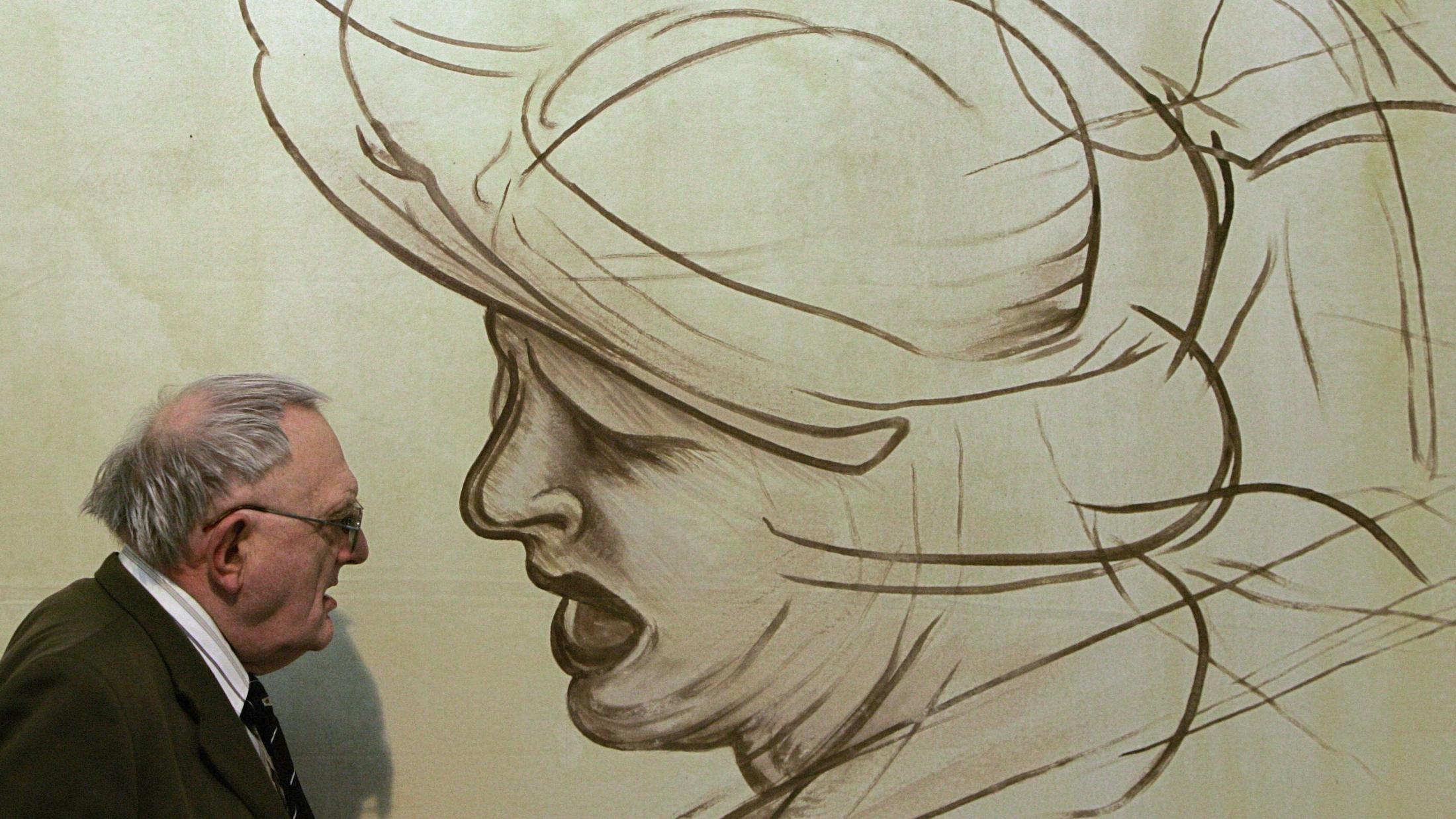
    In the contemporary era, marked by the rapid progression of technology and the allure of digital immediacy, the timeless practice of drawing with a pencil on paper often finds itself marginalized, misunderstood, and demoted to the narrow confines of artistic endeavor. Yet, this perception overlooks the profound and multifaceted role drawing plays in cognitive development, problem-solving, and the holistic understanding of the world around us. Echoing the insightful arguments presented by design historian D.B. Dowd in his seminal work “Stick Figures: Drawing as a Human Practice,” this exploration seeks to illuminate and advocate for the reimagining of drawing. Far from a mere artistic skill, drawing emerges as a fundamental, universally accessible tool for learning, exploration, and personal growth.

    At the heart of Dowd’s thesis is the contention that society has misclassified drawing, undervaluing its potential by confining it to the realm of professional artistry. This misconception is epitomized by the common lament, “I just can’t draw,” a phrase that resonates with many adults who, somewhere along their journey, have internalized the belief that drawing necessitates a high degree of technical skill. However, Dowd challenges this notion, arguing that such beliefs severely limit our appreciation and utilization of drawing as an innate human capacity. In redefining drawing as a form of “symbolic mark-making,” Dowd liberates this activity, placing it alongside writing and speaking as essential, natural methods of expression and discovery.

    The perpetuation of the myth that drawing is exclusively an art form begins early in our educational journeys. An excessive emphasis on realism and technical proficiency can stifle creativity and engagement, producing a sense of inadequacy and disconnection from the medium. However, by broadening our understanding of what it means to draw—to encompass everything from doodles and diagrams to abstract sketches—we recognize that drawing is not just for the “talented” few but a valuable tool for all, facilitating a deeper engagement with the material world and enhancing our capacity for comprehension and analysis.

    Drawing’s true value lies in its versatility and efficacy as a cognitive and problem-solving tool. It enables the visualization of concepts, simplifies the communication of complex ideas, and aids in the iterative process of exploration and understanding. This capacity for visual thinking is not confined to artists or designers but is beneficial across a broad spectrum of disciplines, including science, mathematics, and engineering, where drawing serves as a bridge between the abstract and the tangible.

    In stark contrast to the passive and ephemeral nature of digital information consumption, drawing demands engagement, immersion, and active participation. Dowd critiques the prevailing over-reliance on digital technologies for quick answers, arguing that this reliance undermines our ability to engage deeply and thoughtfully with information. Drawing, by necessity, slows us down, compelling us to observe more closely and to process what we see with greater care and consideration. This engaged learning process not only counteracts the superficiality of digital consumption but also reconnects us with our sensory environment, tapping into the evolutionary benefits of our manual dexterity and spatial intelligence.

    Beyond its cognitive benefits, drawing also plays a vital role in personal and social development. It fosters humility, as the act of drawing confronts us with the limits of our knowledge and capabilities. It teaches patience and respect through the disciplined observation required to capture the essence of our subjects. Moreover, Dowd posits that drawing can significantly enhance our sense of citizenship. By encouraging us to question, to observe critically, and to engage with the world thoughtfully, drawing becomes a tool for informed and reflective participation in society.

    Drawing, therefore, is not merely a skill to be mastered but a practice to be embraced for its capacity to enrich our understanding, to sharpen our minds, and to deepen our connection to the world. The act of drawing, in its most inclusive definition, becomes a journey of discovery—a way to see more clearly, to think more deeply, and to communicate more effectively.

    In advocating for a renaissance of drawing in our educational systems and daily lives, we acknowledge the untapped potential of this simple yet profound tool. By encouraging a culture where drawing is recognized and valued for its role in learning and exploration, we open the door to a more engaged, observant, and thoughtful society. It is time to shed the constraints of narrow definitions and to embrace the pencil and paper not just as instruments of art, but as essential tools in our collective quest for knowledge, understanding, and connection. Let us, therefore, dust off our sketchbooks and pencils—not in pursuit of artistic mastery, but as explorers and learners, eager to unlock the full spectrum of benefits that drawing has to offer.